Smallwood and its surrounding areas: a round-up of Cheshire planning
The latest planning applications from Cheshire East Council

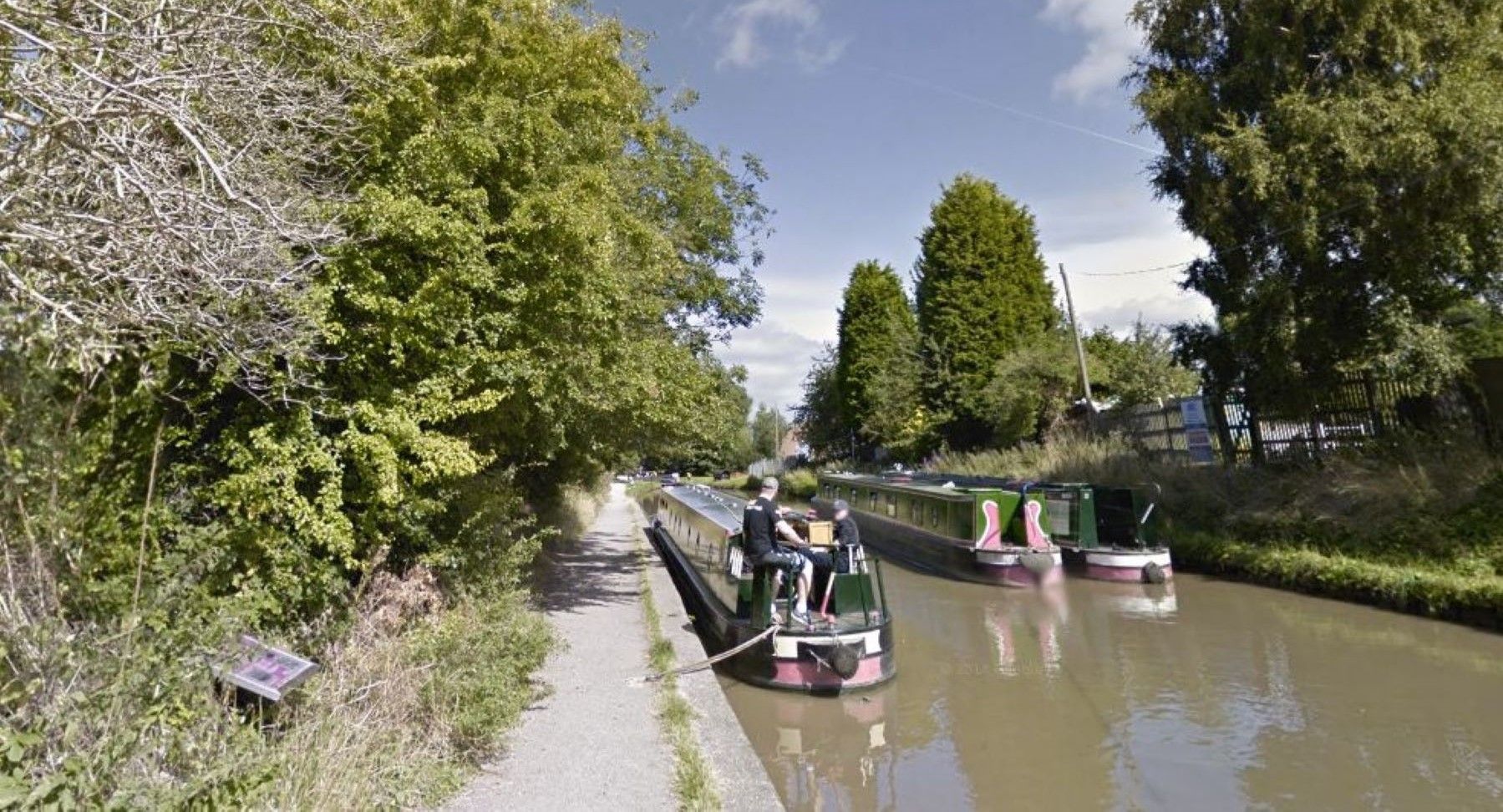
Pictured above: Trent & Mersey Canal, Middlewich. Image credit: Google Street View
The following planning application decisions have recently been announced:
Smallwood
A traditional oak frame extension proposed in Smallwood, Cheshire, would improve the appearance of the property, Cheshire East Council believed.
The feature, with a flat roof forming a balcony, was put forward at The Galleried Barn, Spen Moss, by applicant, Mike Stanmore, at The Natural Oak Company Ltd.
The proposed extension would consist of one new wall, made from oak, and glazing in between two existing brick walls. Main issues were said to include the impact upon the character of the area and on residential amenity.
The barn conversion is set in the open countryside, according to a report. Smallwood Parish Council supported the application.
A representation was received, expressing concerns about privacy, and requesting that parts of the balcony should be fitted with opaque glass.
The extension would comprise the infilling of a gap between two lower extensions which gave that aspect of the house a very unbalanced appearance, planners explained.
They considered the addition would improve the appearance of the dwelling. It was not believed the proposed extension would detract from the agricultural character of the property, and it was considered to be acceptable in design terms.
The balcony had the potential to cause a loss of privacy to the garden of a nearby property, but this could be overcome by fitting an opaque glazed screen on part of the balcony, controlled by a condition.
Recommending approval, planners suggested the proposed development was considered to be of acceptable design, in keeping with the character of the area, and would not adversely impact upon the amenities of neighbours.
Cheshire East Council agreed the extension could be approved.
Holmes Chapel
A makeover was put forward for a Holmes Chapel, Cheshire, fire station. The application was made by Andy Selley from Cheshire Fire and Rescue Service at Holmes Chapel fire station on London Road.
Mr Selley told planning officers at Cheshire East Council the alterations would include a small extension to the rear along with a range of changes and upgrades, including replacement doors and windows, landscaping, and a proposed flag pole with flags.
Holmes Chapel Parish Council had no objection, and there were no other representations.
There were no objections from the borough council's conservation officer who explained the unlisted fire station was just outside the Holmes Chapel conservation area and within the wider setting of the Red Lion public house, which was Grade II listed.
The scheme would improve and enhance the existing appearance of the mid 20th century building and would cause no harm to the setting of the adjacent conservation area.
Planners believed there would be no adverse impact on the amenity of neighbouring properties. The proposal was acceptable, and they recommended approval. Cheshire East Council agreed permission should be granted.
Middlewich
A retrospective application was made for a summerhouse in a Middlewich, Cheshire, conservation area. The application was raised at Canal House, Canal Terrace, by Ashleigh Slowen.
Miss Slowen told planning officers at Cheshire East Council she was seeking approval for the feature at the rear of the large, Grade II listed house, just off the Trent and Mersey canal, which dates back to circa 1820.
The Canal and River Trust, the owner of the property, said the summerhouse had been erected without their prior knowledge or agreement. No comments were received from Middlewich Town Council, but one letter of objection was submitted.
Among other issues, this claimed the summerhouse was not small and an awning was attached to double its size.
Music, noise, and disturbance were said to be caused by parties late at night, and there were concerns it was being used as a business venture rather than for personal parties.
There were neighbouring properties in close proximity, it was also pointed out.
Planners explained the summerhouse was in the garden of the property, set in a conservation area, and within a large boat yard complex which had a number of other Grade II listed buildings.
The Canal and River Trust had not given their consent as they were unaware of its installation.
The summerhouse was considered to be excessively large and utilitarian. It dominated the space and the setting to the rear of the listed building, rising above the height of the garden wall.
Planners believed it did not preserve and enhance the listed building and its setting or that part of the Trent and Mersey conservation area. The impact upon residential amenity was considered to be acceptable.
Although the harm arising would be at the lower end of less than substantial, there were no public benefits to outweigh that. Refusal was recommended, and this was agreed by Cheshire East Council.
Hurleston
Objections arose to the prospect of a hay barn in Hurleston, Cheshire. The application was made by Adam Chalklin at Daisy Bank Farm, Chester Road.
Planning officers at Cheshire East Council were told that the farm produces 6,000 bales a year on 44 acres.
It was estimated that around 1,600 bales a year, from three cuts during the summer months, would be produced from the near 15 acre field, in which the barn was required.
No comments were received from Stoke and Hurleston Parish Council, but eight objections were raised with one letter in support.
Objectors claimed work had already started and raised issues, including loss of views, damage caused by farm vehicles, traffic and highway safety, and possible further development. It was also argued hours of access should be restricted.
The site is located in an area of open countryside where development for agricultural purposes is generally acceptable and appropriate, planners explained.
There were several residential dwellings close to the application site with the closest being about 140m away. Given this distance, it was not considered there would be any significant impact on residential amenity.
It was accepted there may well be noise arising from the hay baling operation, but this had to be expected in a rural location where agriculture was prevalent.
Planners pointed out there was no right to a view, and in any case agricultural buildings were a common sight within the open countryside.
Restricting hours would not be reasonable or enforceable, as by their very nature agricultural operations took place at various hours and were often dictated by the weather.
Recommending approval, planners concluded the proposal was considered to be of an acceptable design to serve its purpose and would be viewed as part of the rural nature of the area.
It would have minimal impact on residential amenity or highway safety. Cheshire East Council agreed Mr Chalklin could have permission.
Shine a spotlight on your neighbourhood by becoming an Area Ambassador.


