Surrey community members plant over 9k trees in February
160 community members joined forces to plant the trees

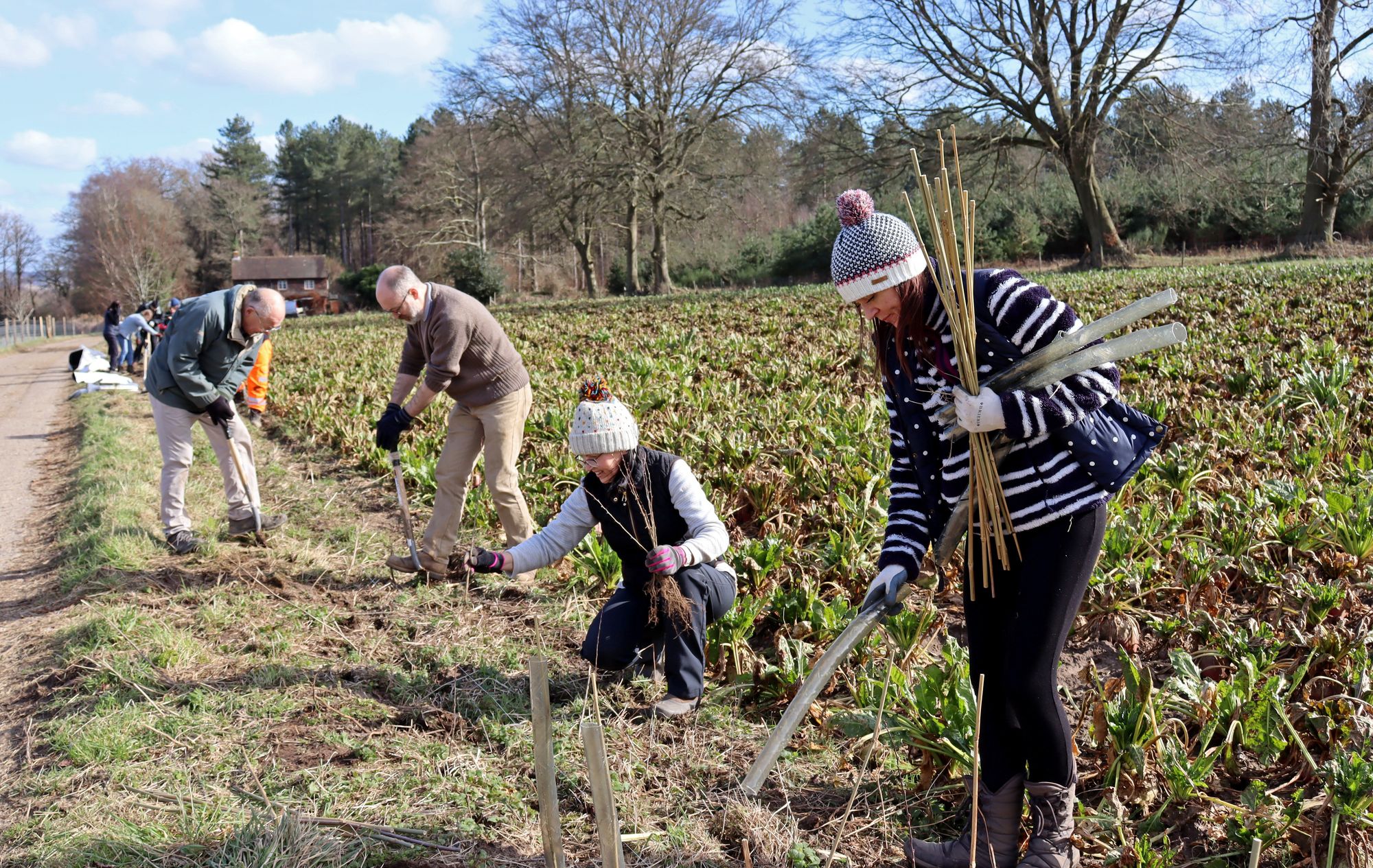
Tree planting at Manor Farm in Surrey
Submitted for publication in the Dorking Advertiser
Farmers, local residents and supporters of climate charity Possible planted 9,150 trees over two weekends in February.
The group of 160 community members joined forces during February 12 to February 13 and February 26 and 27 to plant the trees on Manor Farm in Dorking, Surrey. Spread across 1,830m, the new hedges will draw down CO2 from the atmosphere while providing valuable refuges for native wildlife.
By working with the Nature Friendly Farming Network, Possible is working to actively engage the agricultural sector in reducing its carbon emissions. A vital part of the UK’s economy and rural life, the sector has struggled to reduce its contribution to UK carbon emissions - flatlining at contributing around 10 per cent to the national total for the last decade.
Neil Jones, campaigner at the climate charity, said: “Tree-planting is always an enjoyable and rewarding experience for Possible and all of our volunteers. This has been a particularly successful session and local residents as well as volunteers all had a blast.
"Hedgerow regeneration will undoubtedly be a valuable tool as the UK looks to reduce its carbon emissions and restore its native wildlife. By working with the Nature Friendly Farming Network we hope we can help those in the agricultural sector who want to make a change do so and connect communities from all walks of life to the benefit of both the climate and nature.”

Tree-planting activities like these, as well as other measures, will be essential in allowing the sector to successfully achieve the UK’s legally binding net-zero 2050 target and NFU’s ambition for UK agriculture to be net-zero carbon by 2040.
Hedgerows have a storied history in the UK. Existing since Bronze Age farming, their growth has been on and off since Roman times. Post-1945, to ensure food security in the UK, many policies were put in place to encourage their removal. Only very recently have the negative impacts of their degradation been fully understood and now initiatives all around the country are looking at how we can regenerate them in order to reduce carbon emissions and protect native wildlife.
With these events the charity gives the public opportunities to take action on climate and wildlife - something that can feel monumentally difficult at times - while providing practical utility to farmers, increasing carbon drawdown and wildlife habitats.
Get all the latest news, updates, things to do and more from Dorking's dedicated InYourArea feed.


