Whitley Bay resident supports Brain Tumour Research in memory of late husband
Lee Patterson died in November 2020, just two months after receiving his diagnosis.

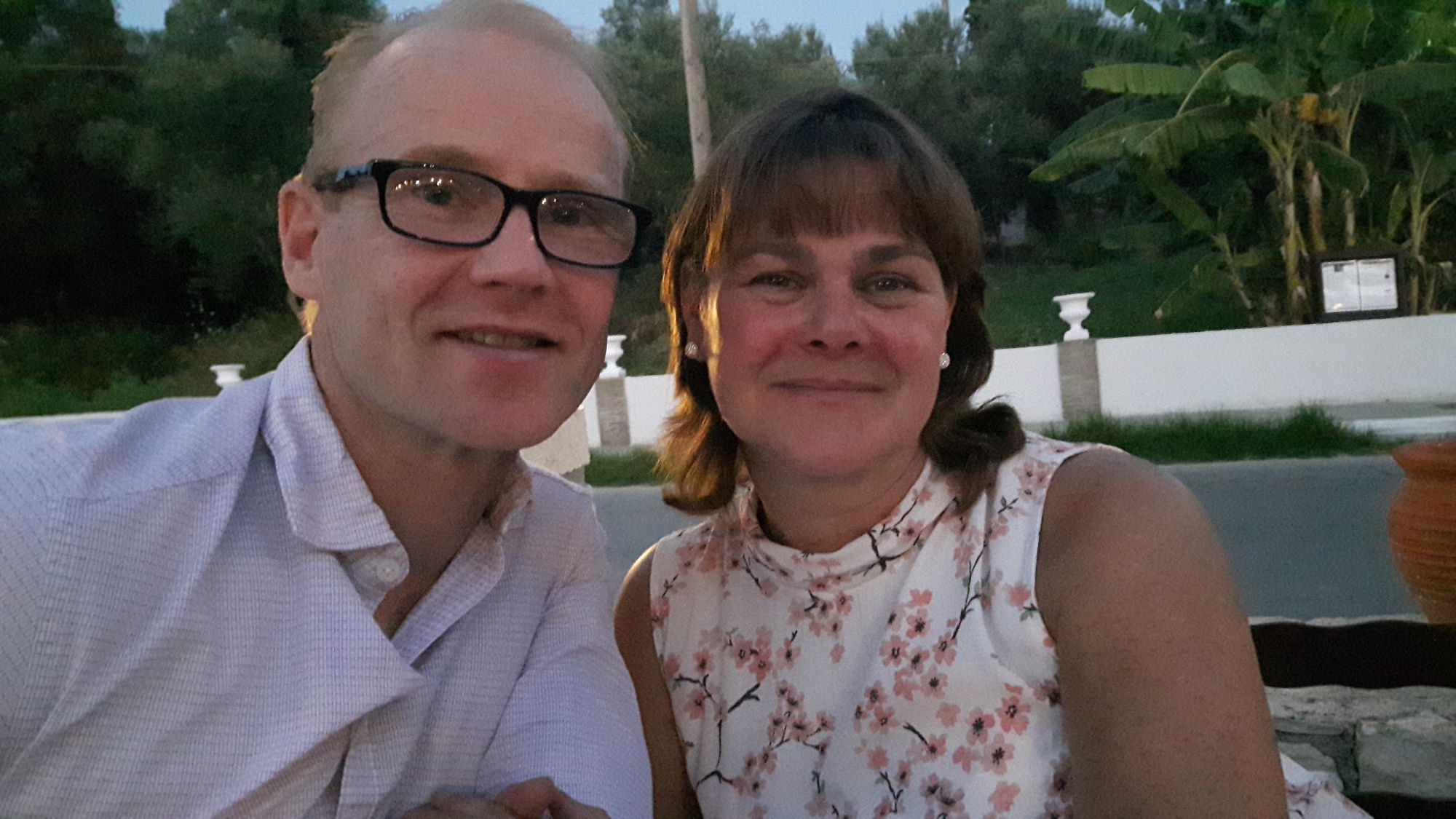
Lee and Kathy Patterson
Submitted by Emily Slater
A local higher level teaching assistant has shared her story of loss as she prepares to host a Wear a Hat Day event for Brain Tumour Research.
Kathy Patterson, from Whitley Bay, Tyne and Wear, is fundraising to help find a cure for the disease that killed her husband just two months after his diagnosis.
Lee Patterson had been the head of Queen Alexandra Sixth Form College in Wallsend, Tyne and Wear, but sadly died from a glioblastoma multiforme (GBM) in November 2020.
Kathy said: "It all started after Lee had been out with friends on the Friday night of August Bank Holiday weekend.
"When he came home, he was slurring his words, so I asked whether he’d had too much to drink but he insisted he’d only had a couple of pints. The following morning, Lee woke up feeling really unwell, as if he had a hangover.
"Later that day, he started being sick and he continued to vomit for the rest of the weekend.
"On the Tuesday he woke up in the night saying his head was spinning and his heart was racing. I rang 111 and they sent an ambulance. The paramedics said his heartbeat was irregular and that he was presenting as very anxious. His right arm and leg were twitching and he was dizzy."
Lee was taken to Northumbria Specialist Emergency Care Hospital in Cramlington, but coronavirus restrictions meant Kathy couldn’t go with him.
He spent around five hours in A&E and was eventually told he was ok and could go home.
Kathy said: "When he was back home, he continued to be sick and had excruciating headaches.
"Later that day, I rang the doctor and explained what had been going on. Lee was diagnosed with vertigo and prescribed sea-sickness tablets. He couldn’t stomach the medication and continued to be sick constantly.
"Eventually Lee’s medication had to be delivered by an injection, as he was still vomiting all the time. He improved temporarily but when the medication wore off, his condition worsened and he started being sick again.
"I was ringing the doctors every other day. They eventually advised me to take him to hospital for a brain scan. I couldn’t go onto the ward with Lee, as there were strict Covid-19 restrictions in place.
"Eventually a registrar came and did some tests, which suggested he hadn’t had a stroke, so she sent him home. I couldn’t believe that they hadn’t carried out the brain scan he’d been sent there to have."
Lee’s condition didn’t improve and on one occasion in mid-September, Kathy and Lee’s parents became so concerned about him that they took him to A&E. Lee was sent for a CT scan, which found he’d had a bleed on the brain. They did a second scan before sending him to Royal Victoria Infirmary (RVI) in Newcastle.
Kathy said: "I said goodbye to him before he was put into an induced coma and transferred to the RVI. When I arrived at the hospital, a nurse told me that Lee was in theatre.
"It was a shock, as I had no idea he was going in for an operation. When he came out, a lovely nurse called Harry was with him and explained Lee had had a drain fitted to relieve the pressure in his brain."
The next day Lee’s consultant rang and asked Kathy and her whole family to come in to talk to him at 8:30am the following day.
Kathy said: "I have three sons. The four of us and Lee’s parents headed into hospital on Friday, September 18, dreading what they were going to tell us.
"The consultant sat us down and explained that Lee had a large, aggressive brain tumour, the size of a fist. He said that it was too late to operate and that there were no other treatment options available. They weren’t expecting him to survive the weekend.
"We couldn’t believe it. Lee was a very fit 51-year-old man. He ate healthily, didn’t smoke and only drank socially. He wasn’t overweight; he ran, cycled and went to the gym. He was always out walking and looked after himself. It seemed so unjust and so cruel."
Lee was moved onto the adult neurosurgical ward, where he was only allowed one visitor at a time and visitors were obliged to wear full PPE. He was brain-damaged and remained unresponsive most of the time but he outlived his initial prognosis.
Kathy said: “I came in early on the morning of November 9 and I could see he’d really changed overnight. At that point, the ward staff said the boys could come in to see him whenever they wanted and I knew what that meant.
"Lee died at 7:30pm on November 10. The boys and I were by his side talking to him and telling him we loved him throughout.
"Lee was a wonderful husband and father, who brought so much joy to all of our lives. We celebrated our 25th wedding anniversary a few months before he died.
"He touched the lives of so many of his pupils and colleagues in his long and successful career. He had a razor-sharp wit, was sociable and so much fun; always up for a party. He loved life and lived it to the full. Losing him is just heart-breaking."
As Kathy tries to come to terms with her terrible loss, she is pursuing fundraising activities, to help find a cure for this devastating disease.
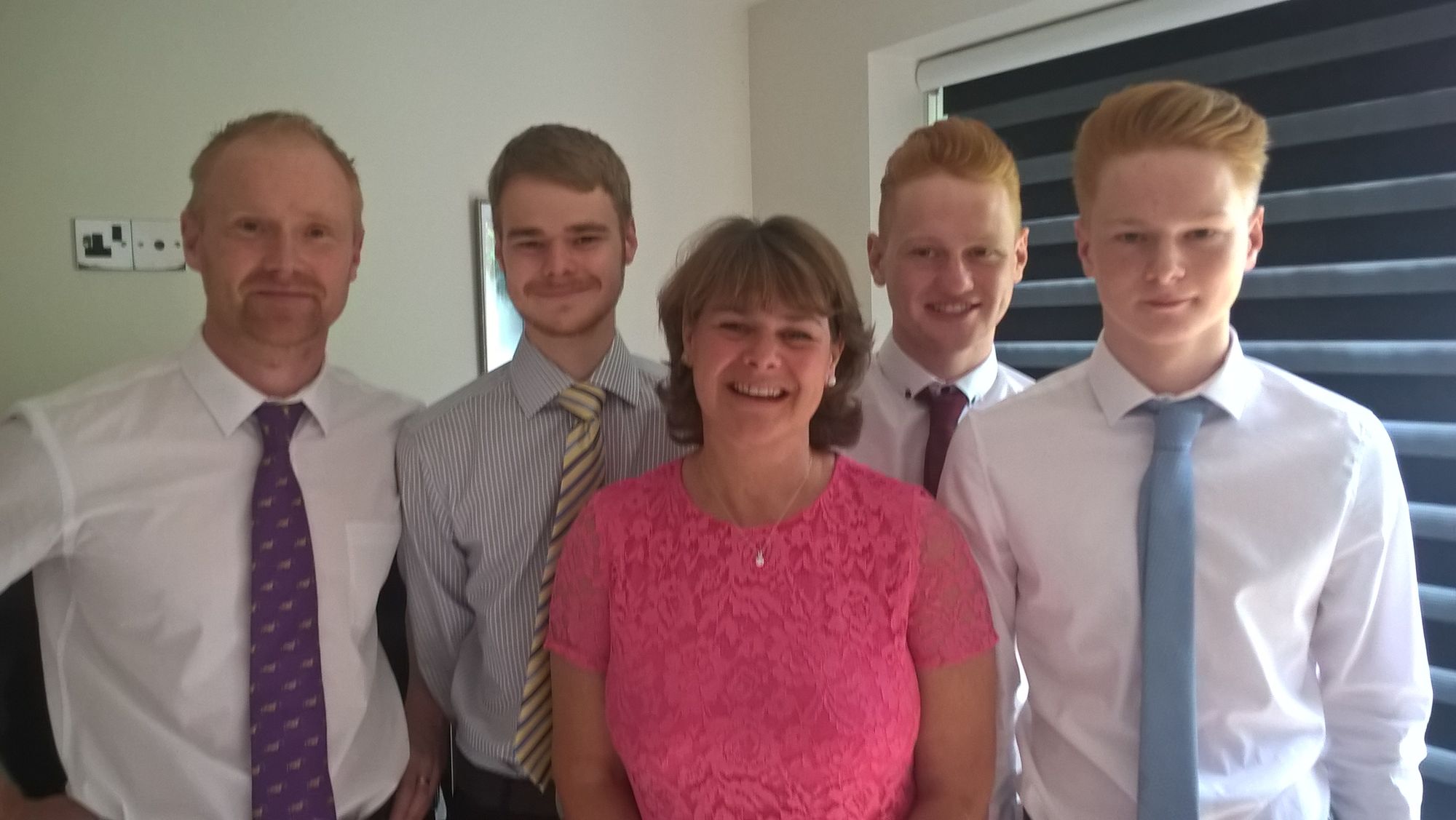
On Friday, March 26, Kathy and her colleagues, along with Whitley Lodge First School pupils, will take part in Wear a Hat Day.
Wear A Hat Day is one of the UK’s biggest brain tumour research awareness and fundraising days.
Brain tumours kill more children and adults under the age of 40 than any other cancer yet, historically, just 1% of the national spend on cancer research has been allocated to this devastating disease.
Brain Tumour Research is the only national charity in the UK singularly focused on finding a cure for brain tumours through campaigning for an increase in the national investment into research to £35 million per year. It is also fundraising to create a sustainable network of brain tumour research centres in the UK.
Joe Woollcott, community development manager for Brain Tumour Research, said: "It’s so touching to see people like Kathy embracing Wear A Hat Day, one year on from the outbreak of Covid-19 in the UK.
"Our supporters’ dedication in these unprecedented times is genuine and inspiring and we can’t wait to join them in putting on our hats, having some fun and raising money to fund sustainable research that will bring us closer to a cure for brain tumours.
"Unlike many other cancers, brain tumours are indiscriminate. They can affect anyone at any time.
"Too little is known about the causes and that is why increased investment in research is vital if we are to improve outcomes for patients and, ultimately, find a cure."
Brain Tumour Research funds sustainable research at dedicated centres in the UK. It also campaigns for the Government and the larger cancer charities to invest more in research into brain tumours in order to speed up new treatments for patients and, ultimately, to find a cure.


